Welcoming Children into the Music of the Church
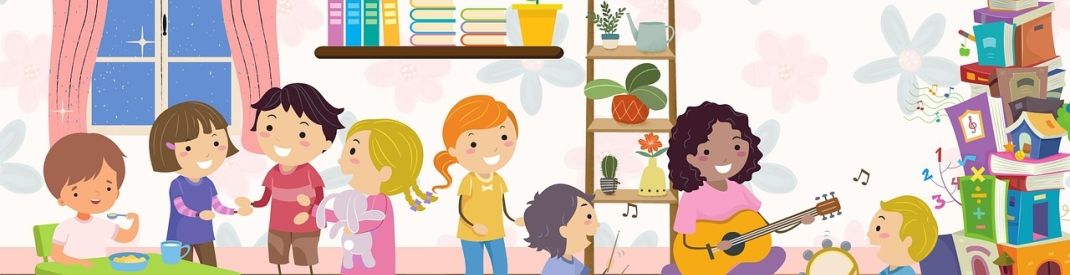
We invite you to take time to unite the youngest and oldest members of your congregation in the worship of God and the singing of our faith. Here are some ideas for including younger worshippers:
1. Encourage the children to be active participants in worship by making sure that they have print bulletins, hymn books, candles, or whatever the adults have as aids to worship. Pre-readers feel included if they have a book or bulletin to hold, if your congregation uses them. But remember, children will absorb what is happening around them, even if they don’t appear to be participating. Ask yourself what aspects of faith and worship you are surrounding the youngest members of the congregation with.
2. For the times when children are present in worship, choose hymns and prayers that reflect issues, ideas, and situations that a child may face. Consider the reading level of the prayers and hymns as well as the language and images a child might easily relate to. (Note: Worship should ideally be written at about a Grade 5 reading level. Consider the overall makeup of your congregation in determining the vocabulary used in prayer writing.)
3. Pre-readers (and those for whom reading is not a standard approach) can join in on a chorus or a repeated phrase. Teach the chorus or phrase, and then give a visual cue each time the chorus or phrase is coming up in the hymn. For example, cue the “Hallelujahs” in VU 155 “Jesus Christ is risen today” for the first couple of verses.
4. The psalm responses in Voices United provide an opportunity for easy participation by everyone. Take time to teach the psalm response and invite everyone to sing along (or sign along). Since many of these sung responses are direct quotes from scripture, learning these responses is a great way to welcome scripture into one’s heart.
5. Children able to read can join in if shown how to follow the words in the hymn book, if you use physical books. Even pre-readers might enjoy playing at following along in a hymn book. Be attentive to the child and to how they want to participate. Don’t assume that they aren’t interested.
6. Help children, especially pre-readers and beginning readers, memorize the songs so they can sing along. This can be done in many ways:
• Use a flip chart with picture cues for key words in each line of the song.
• Teach the words of the song, beginning with the last line of the verse/song and then adding line by line back to the first line.
• Share the story behind the hymn, as well as the stories of the author or composer, so that the hymn has more meaning for the children.
• Have the children learn a new hymn (or the first verse or chorus) and then have them help teach it to the congregation. The children might like to add their own actions or drama to help others learn the hymn. They also might like to share the story of the hymn and its author and composer.
• Ask your church musician to make a recording of the music for a hymn on the instrument usually used in the congregation (piano, organ, guitar, accordion, etc.) so that the young people can sing along to that instrument as they learn the hymn.
7. Teach the children the traditional favourite hymns of the congregation. With the children or the whole congregation, discuss the meaning of the words and images. Highlight any theological terms or biblical images that are important to the hymn.
8. Have a congregational member share why they like a particular hymn and what meaning the hymn has for them. Then sing the hymn together. Include children, youth, and adults in this sharing.
9. Encourage children and youth who sing or play an instrument to share their music in worship. They might play a song they know from music lessons during the prelude or the collection of the offering or as a special piece during the service. Depending upon their skill level, they might play or sing one line or one verse of a hymn prior to the congregational singing. As appropriate for certain hymns, you might bring out hand drums or rhythm instruments and invite anyone who wishes to choose an instrument and join in the song.
10. Invite someone who knows sign language to teach everyone how to sign the hymn. (The Then Let Us Sing! resource will include a component of hymns in ASL and LSQ.) Signing engages the brain in a new way and makes space for participation of those who, for many different reasons, don’t engage in singing.
11. Choose hymns and songs that are important to the children and youth to sing together in worship. Honour their images and styles of music.
12. Invite children to write prayers (or team with the worship leader to write prayers) to be used in Sunday worship. Ask young people to read scripture, greet at the door, collect the offering, light candles, etc.; whatever they feel comfortable doing. There are young people in your congregation who want to be active participants, not passive observers, of worship. Engage them!
Children and youth are an integral part of our worshipping community. They will learn to feel the welcoming and inclusive nature of God’s love by being welcomed and included within the worship and singing life of the congregation.
Mary Beth Nicks Barbour and Susan Lukey, members of the Hymn-Worship Resource Committee that compiled and edited Voices United (1995). This piece has been adapted from the introductory booklet for Voices United.