

Worship, Music, and Spirituality: Understanding White Space
When in congregational ministry in downtown Toronto, I made a friend from the Nation of Islam who would visit me on rainy days. At the time, I thought he was bold, brazen, and wrong to declare, in my church office, that I served a White church. I argued with him over tea. Years later, I realize that he was trying to teach me about the embedded Whiteness of North American Christianity, particularly in the expression that I served. I was the one who was bold, brazen, and wrong.
Whiteness is a tricky term. It doesn’t just mean how things appear, although this is often how it is used (similar to how we might describe a community as being multicultural or diverse). Whiteness also speaks to spaces that rely on negative stereotypes of people who are not White to preserve the values of Whiteness. Such preservation almost always comes at the expense of those who are not considered White (and who do not uphold these “values”). Whiteness, in my experience, is often shorthand for places where systemic oppression flourishes.
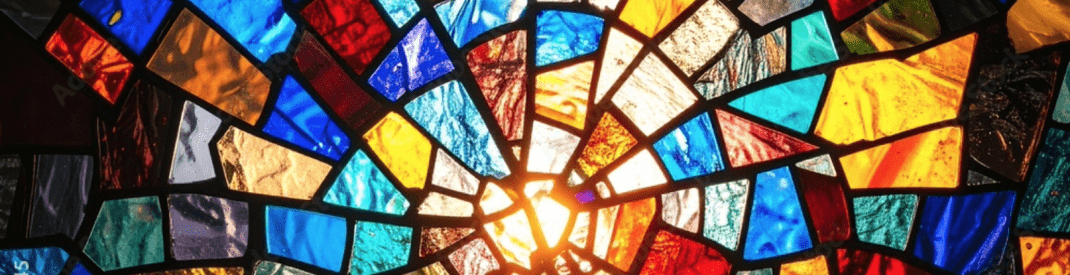
My friend knew the church to be a White space. Historical reminders of the White church lined the walls leading up to my office, and beautiful stained glass perfectly caught the light to colour the crowded city streets where my friend did his canvassing. Nobody can deny that the church was a White space. My argument was always that the church was different now, the church was changing, becoming something better. “The church is no longer a White space,” I would boldly protest, “it is God’s space; it is Christ’s church.” Truthfully, I was uncomfortable with anyone calling a space that I, a proud Black woman, was a part of White.
I was wrong; the church, as I know it, remains a White space. Many folks from other communities negatively affected by the church’s Whiteness have taught me this. As long as values of Whiteness are upheld at the expense of others, as long as systemic racism exists within the church, as long as our words and practices rely on or propagate negative and harmful stereotypes of people who do not fit that Christian White norm, we are a part of the White church.
Of course, I do not want to be a part of a White church. I want to belong to Christ’s church, and I suspect that this is true for most of us. In those early days, I prematurely celebrated our anti-oppression work and the beautiful diversity amongst us as the wine of arrival, because it was my aspiration and because it was easier for me to reconcile with as a Black person in a White space. I better understand now that we are not yet the church that God would have us be. We remain in a liminal space of here and not yet. Personally, I think it will take us generations to denounce the title White church and to dismantle the “values of Whiteness” that the church helped to build over centuries. Each generation will need to faithfully commit to the transformative, restorative, and reconciliatory work of building Christ’s church while relearning and denouncing the church we no longer wish to be. It won’t be us who will be able to declare boldly that we are no longer a White church—that would be brazen. It will be someone in the community affected by the legacy of Whiteness who will reflect back to us who we are.
Love,
Alydia
Alydia Smith, Program Coordinator, Worship, Music, and Spirituality